Types of arthritis include:
Psoriatic Arthritis is a type of arthritis that affects people who have psoriasis, a skin condition characterized by red and scaly patches of skin. Psoriatic arthritis is considered an autoimmune disorder and causes joint inflammation, stiffness and pain that may affect the fingers, toes, feet and lower back.
Osteoarthritis
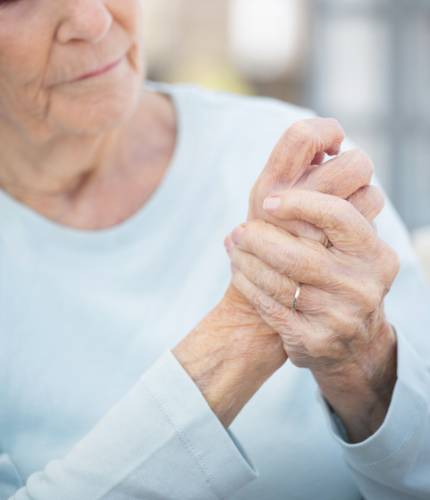
Osteoarthritis is the most common form of arthritis. It develops as the cartilage protecting the bones of a joint wears down over time. It occurs more frequently in older individuals, however it sometimes develops in athletes from overuse of a joint or after an injury. It commonly affects the fingers, knees, lower back and hips and is often treated with medication and certain forms of exercise and physical therapy.
Rheumatoid Arthritis
Rheumatoid arthritis is considered an autoimmune disorder caused by the body attacking its own healthy tissue. Rheumatoid arthritis affects the lining of the joints, and in addition to joint pain and inflammation, it sometimes affects other organs of the body including the skin, eyes, heart, lungs and blood vessels. Rheumatoid arthritis is more common in women than men and it usually develops in individuals over the age of 40.
Gout
Gout is a form of arthritis that cause painful, swollen, red and inflamed joints. Gout is called by a build-up of uric acid within the body that forms crystals within the joints and surrounding tissues. This build-up of crystals causes acute pain and swelling that commonly affects the joint of big toe, but can also occur in the feet, ankle, knees and hands. The symptoms of gout often appear suddenly and without warning, often in the middle of the night.
Psoriatic Arthritis
Psoriatic Arthritis is a type of arthritis that affects people who have psoriasis, a skin condition characterized by red and scaly patches of skin. Psoriatic arthritis is considered an autoimmune disorder and causes joint inflammation, stiffness and pain that may affect the fingers, toes, feet and lower back.